The story of the LaCrosse school building reflects more than a century of community investment, adaptation, and resilience. From its earliest beginnings in rural township schools to the construction of the current building in the early 20th century, this history traces the evolution of a growing community. Understanding the past provides important context for understanding not only the building itself, but its continued significance as a place of gathering, learning, and shared identity.
A Brief History of Education in Dewey Township
Education in Dewey Township dates back to 1858, when the first school was established at Hog Island, just south of St. Martin of Tours Catholic Cemetery. As the community grew, so did the need for additional schools.
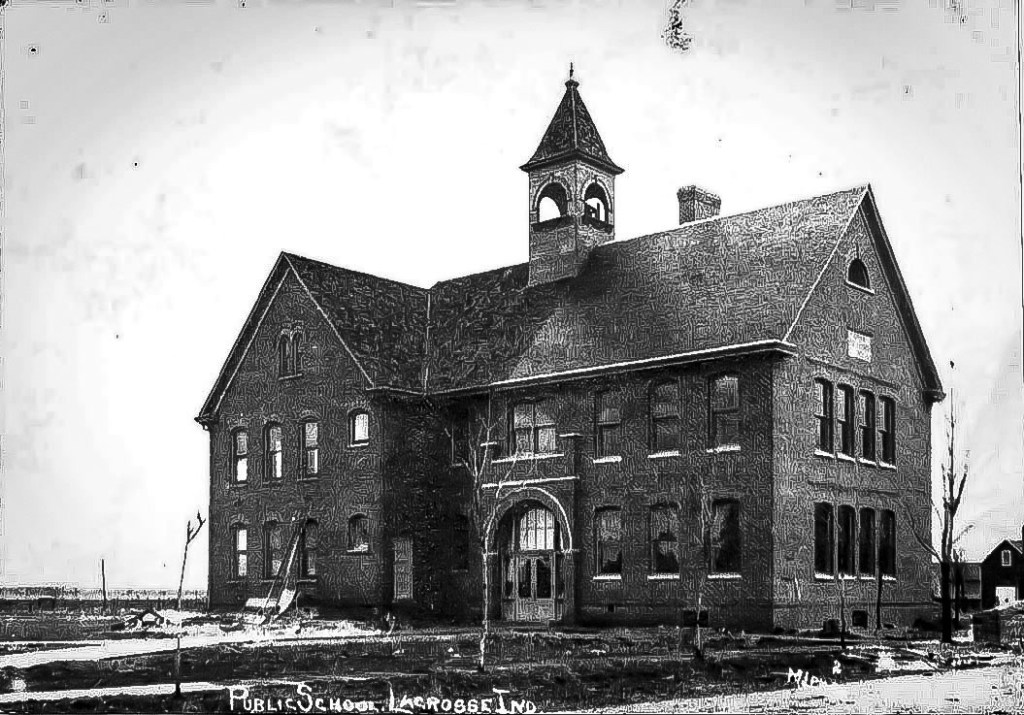
By 1900, a second school was built in the settlement of Wilder Station, now known as Wilders, located three miles south of LaCrosse. Around the same time, a new four-room brick school was constructed in LaCrosse where the present day gymnasium stands, replacing the original Hog Island School.
Growth and Early Challenges
As enrollment increased, the four-room school quickly became overcrowded. By 1909, classes were being held in the nearby Rosenbaum Tavern, with Miss Lisetta Sommers serving as teacher. Two additional classrooms were added in 1910 to help accommodate the growing student population.
The first graduating class of LaCrosse High School was in 1905, consisting of Arthur Adams, John Adams Jr., and Elsie Cook. Following the school’s official commissioning in 1912, the first graduates were Marie, Erma, and Emma Cook. At the time, the high school curriculum included Algebra, English, Latin, Physics, and History.
Building the 1915 School
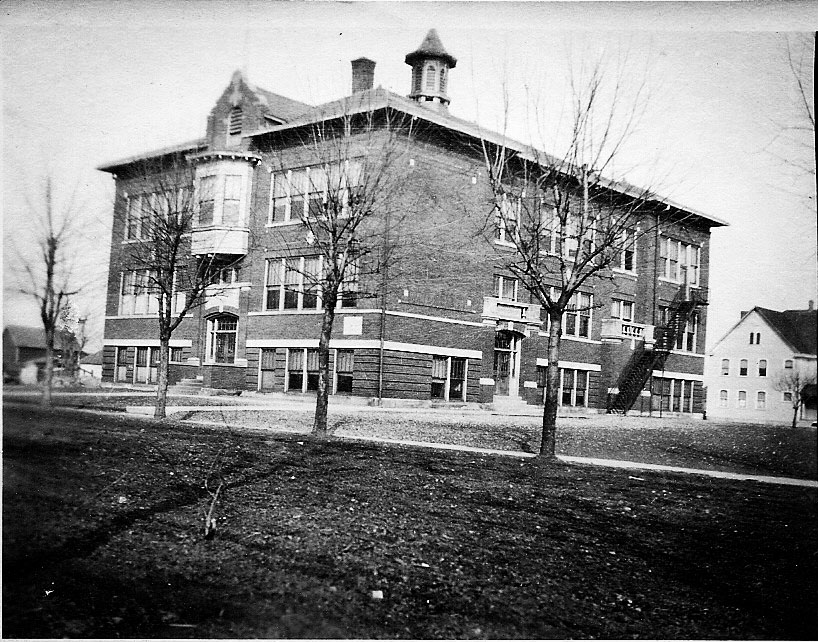
In 1915, the State Board of Health condemned the existing LaCrosse school, declaring it no longer suitable for students. The decision created an immediate challenge for the community, but also an opportunity to build something better.
The Dewey Township Advisory Board acted quickly, approving plans for a new school building at a cost of $24,431. For a small rural community, this was a major investment and a clear reflection of the value placed on education and the future of its children.
Completed in early 1916, the new school quickly became a cornerstone of the community, providing a safe, modern learning environment and establishing the foundation for more than a century of continuous educational use.
The Old Annex: A Community Hub
After the new school opened, the original building was auctioned and purchased by Charles Tuesberg. It was relocated behind the original Methodist Church and repurposed as a community center known as the “Old Annex.”
The Annex became an important gathering place for the community. It hosted church events, meetings, and social gatherings, including Mother’s Day banquets sponsored by Boy Scout Troop No. 32 and monthly meetings of the LaCrosse Conservation Club, featuring dinners, live music, and guest speakers
In 1957, both the Annex and the original Methodist Church (built in 1907) were demolished to make way for a new church building.
Expansion and the Gymnasium
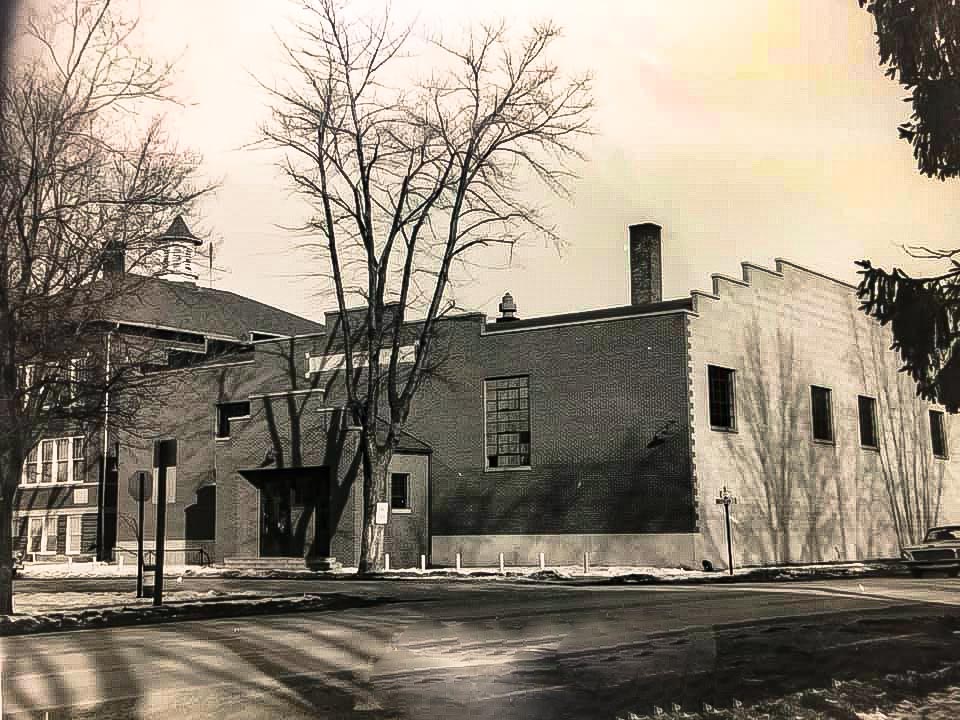
In 1949, a new gymnasium was constructed at a cost of $130,000. The facility included a stage, cafeteria, and kitchen, making it one of the most advanced school facilities in the area at the time.
When it opened, the gym was considered the finest among the twelve county-run schools and the third largest in LaPorte County, behind Michigan City, Elston, and LaPorte.
Basketball quickly became an important part of school life. Bill Ferrier, a 1914 graduate of LaCrosse High School, is credited with introducing the sport to the school and served as its first coach from approximately 1925 to 1927.
The first game played in the new gym, soon to be known as the Tiger Den, was against North Judson. Although LaCrosse rallied to close the gap in the third quarter, North Judson ultimately won the game 55–38.
Historical Significance
The former LaCrosse school building still stands as the community’s most significant surviving structure. Designed in the Mission/Spanish Colonial Revival style, the building features red brick construction with limestone detailing and retains a high degree of historic integrity.
The school served generations of students and remained in continuous educational use for over a century. The addition of the gymnasium further expanded its role as a central hub for both education and community life.
Importantly, the building is recognized as “Outstanding” in the Indiana Sites and Structures Inventory, the highest possible rating, indicating strong potential eligibility for listing on the National Register of Historic Places.
Architectural Character
The 1915 school building is a two-story masonry structure with a raised basement, defined by a red brick exterior with limestone banding and ornamentation, symmetrical façade and central entry, distinctive Mission-style dormer and cupola, and some of the original interior features including wood doors, cabinetry, and chalkboards.
Despite minor alterations over time, the building retains its historic layout, materials, and defining architectural elements, making it an excellent candidate for preservation and adaptive reuse.
Community Impact & Future Use
Historically, the school has served as both an educational institution and a gathering place for the LaCrosse community. Even after earlier buildings were repurposed, such as the “Old Annex,” which hosted community events, meetings, and social gatherings, the site has remained central to civic life.
Today, the Community Schoolhouse Inc. initiative seeks to revitalize this historic structure as a community-centered space, continuing its legacy of service while adapting it to modern needs.
 Community Schoolhouse, Inc.